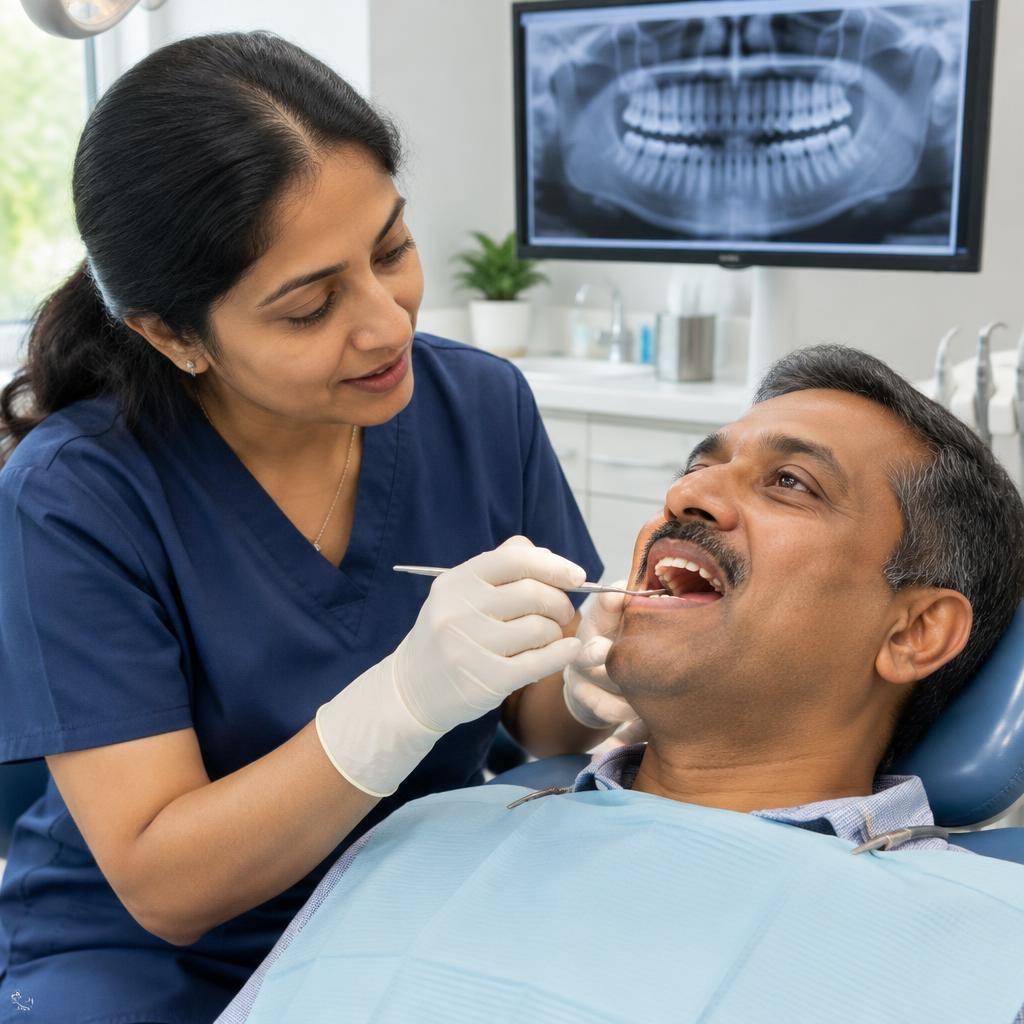
A loose adult tooth can often be saved if it is treated early. The most common cause is gum disease, which weakens the bone around the tooth. Treatment ranges from a deep cleaning and a small splint that holds the tooth steady, to gum treatment or, if the tooth cannot be saved, a replacement. This guide explains why teeth get loose, what a dentist can do, and what you should and should not do at home.
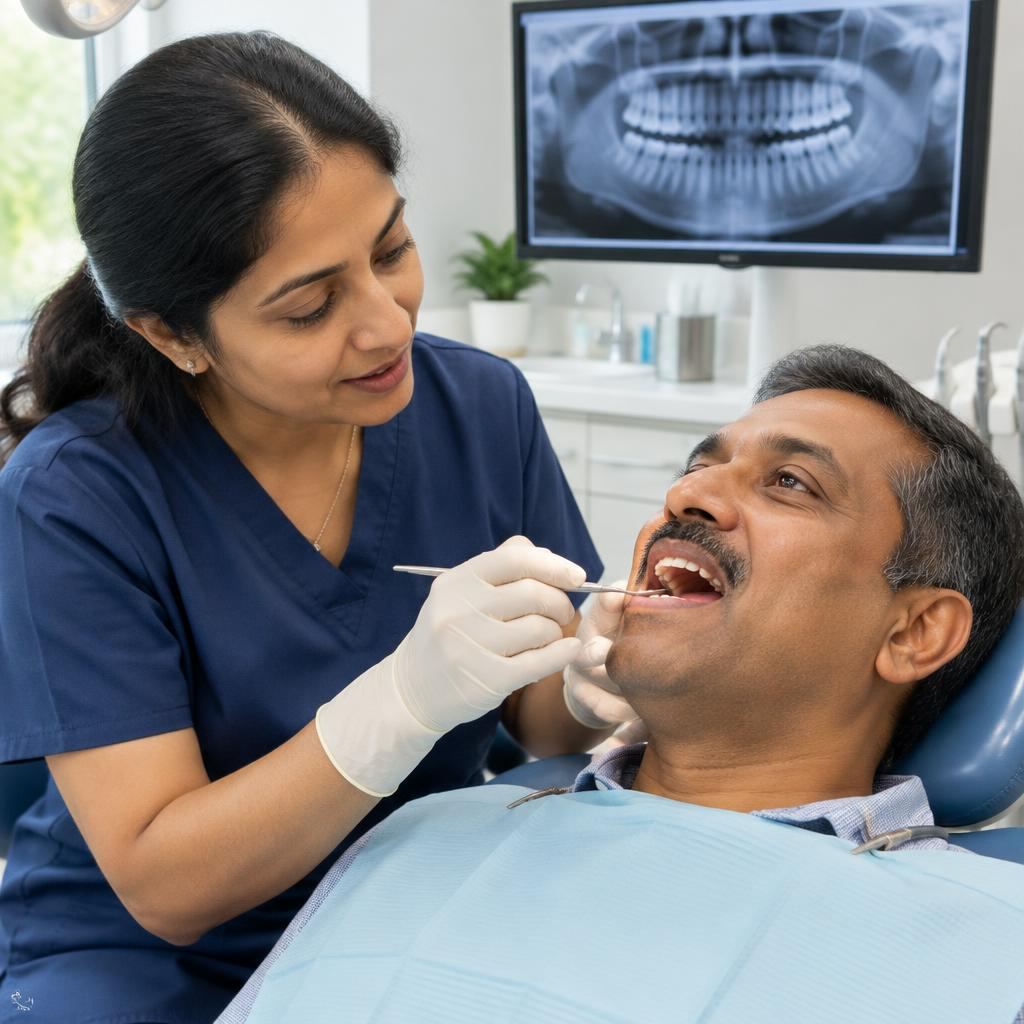
Go to a dentist the same day if: a tooth became loose after a fall or hit, it has moved out of place, there is swelling or pus, or you have fever with tooth pain. For a knocked-out tooth, see our dental emergency first-aid guide.
Is a Loose Tooth Normal?
In children aged about 6 to 12, yes — milk teeth loosen and fall out to make room for adult teeth. In adults, no. An adult tooth should feel firm. Any looseness means something is affecting the gums, bone or the tooth itself, and it is worth getting checked.
Common Causes of a Loose Tooth in Adults
- Gum disease (periodontitis): the most common cause. Plaque and tartar left on the teeth cause gum infection that slowly destroys the bone holding the teeth. Early signs are bleeding gums, bad breath and gums pulling back.
- Injury: a fall, sports hit or accident can loosen a tooth even if it does not break.
- Teeth grinding or clenching: heavy force, often during sleep, can loosen teeth over time.
- Infection at the root tip: an abscess from a deep cavity can weaken the bone around one tooth.
- Pregnancy: hormone changes can make gums softer and teeth feel slightly loose. This usually settles after delivery, but gums should be checked.
- Diabetes and smoking: both make gum disease faster and harder to control.
Read more about the early stage in our guide to bleeding gums.
Loose Tooth Treatment Options
1. Deep cleaning (scaling and root planing)
If gum disease is the cause, the first step is removing tartar from above and below the gumline. This lets the gums heal and tighten around the tooth. It is done under local anaesthetic, so it is comfortable.
2. Splinting
The loose tooth is joined to the firm teeth next to it with a thin wire or fibre bonded on the back. This holds it steady while the gums and bone heal. Splints are used after injuries and during gum treatment.
3. Bite adjustment and night guard
If one tooth is taking too much force when you bite, the dentist can smooth a few high spots. For grinding, a custom night guard protects the teeth while you sleep.
4. Gum treatment and surgery
For deeper gum pockets, gum treatment and in some cases bone grafting can help support the tooth. Our gum treatment cost guide explains the options.
5. Root canal treatment
If an infection at the root tip is causing the looseness, a root canal removes the infection, and the tooth often firms up as the bone heals.
6. Extraction and replacement
If too much bone has been lost, the tooth may need to come out. It can then be replaced with a dental implant, a bridge or a denture. See our single tooth implant cost guide.
Can a Loose Tooth Tighten Again?
Often yes, when the cause is treated early. Teeth loosened by a mild injury or by inflamed gums commonly firm up within a few weeks once the gums heal or the tooth is splinted. Teeth that have lost a lot of bone usually do not tighten fully. An X-ray shows which situation you are in.
How to Look After a Loose Tooth at Home
There is no home remedy that tightens a loose tooth. Until you see a dentist:
- Do brush gently with a soft brush, including along the gums.
- Do rinse with warm salt water two or three times a day.
- Do eat soft food and chew on the other side.
- Don't wiggle the tooth with your tongue or finger.
- Don't bite hard food, nuts or bones with that tooth.
- Don't try to pull an adult tooth out yourself.
What Happens at Your Visit
- The dentist checks how much the tooth moves and measures the gum pockets.
- An X-ray shows the bone level around the tooth.
- You get a plan with options and written costs before treatment begins.
- If needed, a splint can often be placed the same day for comfort.
Deep cleaning for gum disease typically costs ₹2,500 to ₹4,000 per quadrant (one quarter of the mouth) in the Tricity area. Other treatments are quoted after the examination.
Frequently Asked Questions
Can a loose tooth be saved?
Often, yes. If treated early with deep cleaning, splinting or a root canal, many loose teeth firm up again. Teeth with severe bone loss may need to be replaced.
How can I tighten a loose tooth at home?
You can't tighten it at home. Gentle brushing, salt water rinses and soft food help the gums while you wait to see a dentist, who will treat the cause.
What is the most common cause of a loose tooth in adults?
Gum disease, where plaque and tartar cause an infection that slowly destroys the bone around the tooth.
My front tooth is loose after a fall. What should I do?
See a dentist the same day. Don't wiggle it, keep to soft food, and if the tooth has moved, the dentist can put it back in place and splint it.
Is a loose tooth an emergency?
It is urgent if it followed an injury, the tooth has moved, or there is swelling, pus or fever. A tooth that has slowly become loose should still be checked within a few days.
Does splinting a loose tooth hurt?
No. The splint is bonded to the back of the teeth without drilling and usually needs no injection.
Book a Loose Tooth Check-Up
Smiles & Scans Dental Clinic is at SCO 31, Sector 125, New Sunny Enclave, Kharar, about 15 minutes from Mohali. We are open 10:00 AM to 7:00 PM every day except Tuesday. On Tuesday the clinic is closed, but for an emergency you can call and we may see you by appointment. Call +91 90413 60096 or book online.